Guest register in Slovakia: what it must contain
What to record in your guest register in Slovakia: required details under three laws, extra data for foreign guests, local bylaw rules and keeping it digitally.
Updated 7 min read7 sources
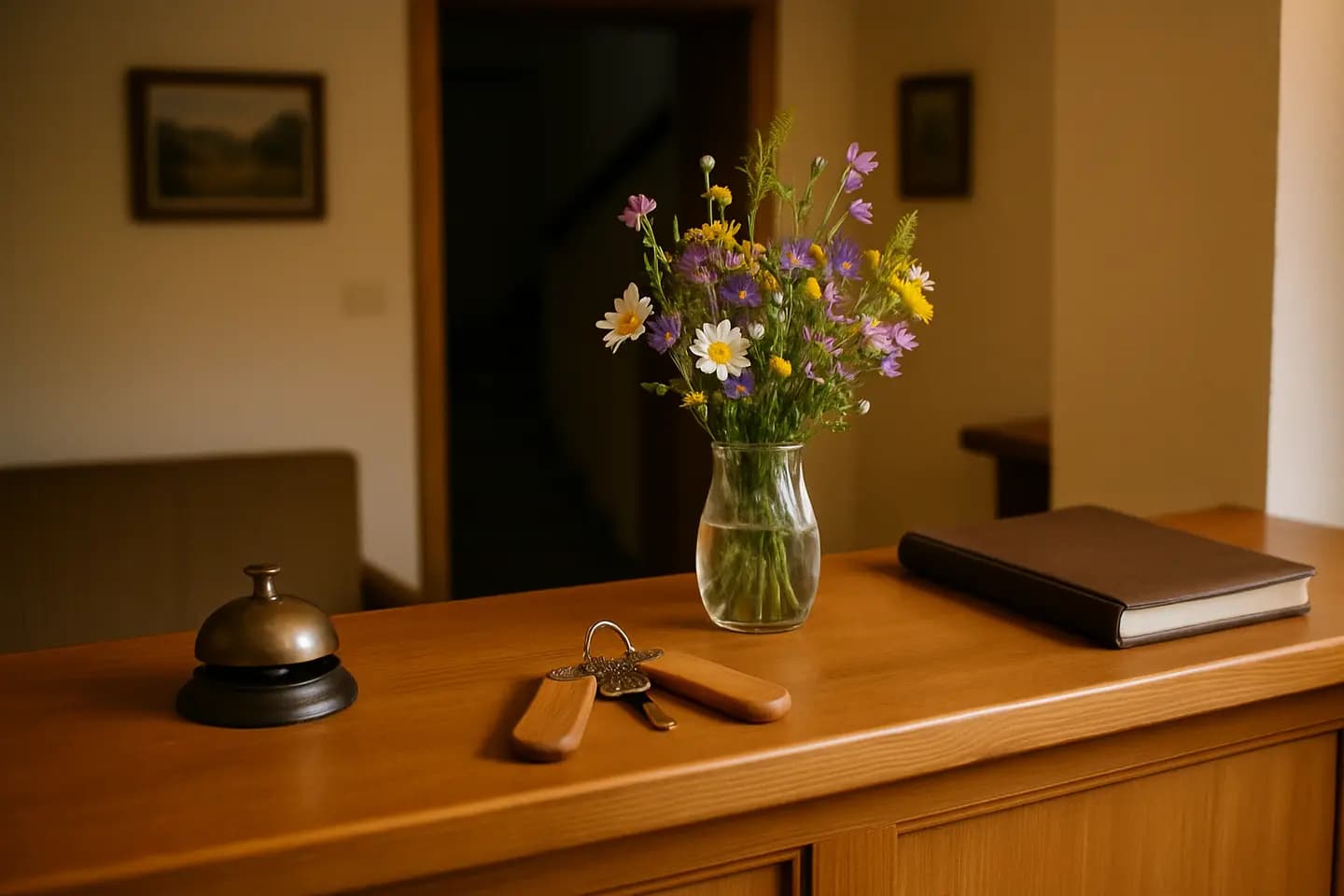
Anyone in Slovakia who provides accommodation under an accommodation contract must keep a guest register, known in Slovak as the kniha ubytovaných. Under the law on reporting residence, it contains the guest's full name, ID card or travel document number, permanent address and length of stay. For foreign guests you add nationality and date of birth, and for tourist tax purposes also the date of birth, type of ID document and number of nights. Your municipality (obec) can add further requirements in its local bylaw (VZN, všeobecne záväzné nariadenie, a generally binding regulation), such as numbered pages or a phone number for the guest.
Three laws, one register
The rules for the guest register are not in a single piece of legislation. Three laws overlap, plus your municipality's bylaw, so it pays to keep one register that satisfies all of them at once.
Act on Reporting Residence of Citizens (zákon č. 253/1998 Z. z., § 24)
Individuals and companies that provide services under an accommodation contract must keep a guest register with the following details:
- the guest's first name and surname,
- ID card (občiansky preukaz) or travel document number,
- permanent address,
- length of stay.
On request, you must provide the data in the register to state authorities responsible for protecting the constitutional order, internal order, security and defence of the state.
Act on the Residence of Foreigners (zákon č. 404/2011 Z. z., § 113)
Under this law, a foreigner is anyone who is not a citizen of the Slovak Republic, so this includes guests from Czechia or Poland. The accommodation provider must:
- verify the identity of the foreign guest on arrival,
- also record their nationality and date of birth in the guest register,
- make sure the residence report form is completed and delivered to the police within five days,
- allow the police to enter the premises for inspection.
For this law, an accommodation provider means a legal entity or a self-employed individual (fyzická osoba – podnikateľ) providing accommodation under an accommodation contract. We explain the reporting procedure in detail in our article Reporting foreign guests.
Local Taxes Act (zákon č. 582/2004 Z. z., § 41a(2))
Whoever is liable to collect the tourist tax (daň za ubytovanie) keeps detailed records of everyone they have accommodated, on paper or electronically, in the form of a register. It contains:
- first name and surname,
- permanent address,
- date of birth,
- number and type of identity document (ID card, passport or other document),
- length of stay, i.e. the number of nights,
- any other records needed to calculate the tax correctly.
The register must be kept clearly, with entries in chronological order according to when the tax liability arose.

What municipalities add
In its bylaw on local taxes, the municipality sets out what the register must contain and how it is checked. Three real examples show how much this can vary:
- Liptovský Ján (VZN č. 2/2025, § 15): the register contains name and surname, ID card or passport number, permanent address, arrival and departure dates and the amount of tax collected. The pages must be numbered, and the register must be presented to the municipality for verification when the tax liability arises. If you issue a receipt from a cash register, you record its number and date in the register.
- Demänovská Dolina (VZN č. 4/2025, § 18 and 19): the content of the register follows the law, you present the register during inspections, and when payment goes through a cash register you record the receipt number and payment date.
- Horná Lehota (VZN č. 1/2025, § 14): the register must have numbered pages and must be taken to the municipal office (obecný úrad) for stamping within 30 days of the tax liability arising. On top of the usual details it requires the date of birth, at least one phone number for the guest and the reason for any exemption from the tax.
One combined list of fields
If you want a single register that meets the law and the bylaws of the municipalities above, record:
| Detail | Required by |
|---|---|
| first name and surname | Act 253/1998, Act 582/2004, VZN |
| permanent address | Act 253/1998, Act 582/2004 |
| type and number of ID document | Act 253/1998 (number), Act 582/2004 (type and number) |
| date of birth | Act 582/2004, Act 404/2011 for foreigners, VZN Horná Lehota |
| nationality | Act 404/2011 for foreigners |
| arrival and departure dates, number of nights | Act 253/1998, Act 582/2004, VZN |
| amount of tax collected, payment receipt number | VZN Liptovský Ján, also Demänovská Dolina when using a cash register |
| phone number | VZN Horná Lehota |
| reason for tax exemption | VZN Horná Lehota, and in practice wherever you apply an exemption |
It is worth recording nationality for every guest: you can see straight away who needs a foreign guest residence report.
Paper or electronic register
The Local Taxes Act allows both. With an electronic register, bear in mind that some bylaws assume a paper book (numbered pages, official stamp). If your municipality has such a requirement, ask how to meet it with an electronic register.
For foreign guests, an electronic register also makes reporting to the police easier. In its electronic service "Zápis do knihy ubytovaných" (entry in the guest register), the Ministry of the Interior lets you enter foreign guests manually via a form or in bulk by importing an XML file from an electronic guest register. It also points out that you are still obliged to make sure the official form is completed, keep it for two years and present the original on request.
Recording guests in practice: from booking to departure
- At booking, find out the number of guests and their nationality, so you know whether you will need a form for the Foreign Police (cudzinecká polícia) for anyone.
- On arrival, ask for identity documents and record every guest, including children: name, permanent address, date of birth, type and number of document.
- For foreign guests, add nationality and date of birth and have them sign the residence report form.
- For exempt guests, record the reason, for example the number of a disability card (preukaz ŤZP), if your municipality's bylaw requires it.
- When the tax is paid, issue a receipt and, depending on the bylaw, record the amount of tax or the cash register receipt number.
- On departure, add the departure date and number of nights, which then form the basis of your report to the municipality.
If you fill in the register afterwards from your bookings, dates of birth and document numbers are easily missing. It is simpler to collect the details directly from guests on arrival, or even before.
Personal data in the register
The register contains guests' personal data, so protect it against loss and unauthorised access, and do not ask for more data than the law and your municipality's bylaw require. Do not leave a paper register lying around at reception or in a hallway, and protect an electronic register with a password.
Who can inspect the register
- The municipality, as the authority administering the tourist tax, for example during a tax inspection or on request (the bylaws of Demänovská Dolina and Horná Lehota say so explicitly).
- The police, when checking obligations under the Act on the Residence of Foreigners; the accommodation provider must let them into all areas of the accommodation.
- State authorities under § 24(2) of the Act on Reporting Residence.
How SFERIN handles it
With the guest registration add-on, a QR code hangs in your property, guests fill in their details on their own phone, and the fields for foreign guests appear only when they are actually needed. The result is a guest register with an export for the authorities, and personal data is stored encrypted on a server in the EU. We will tell you about the link with the tourist tax and the price of the add-on when we prepare your free website preview.
Frequently asked questions
Do I have to keep a guest register even if guests book through booking portals?
Yes. Anyone who provides accommodation under an accommodation contract must keep a guest register (§ 24 of Act No. 253/1998 Coll.), and anyone liable to collect the tourist tax must keep a register for tax purposes (§ 41a of Act No. 582/2004 Coll.). How the booking was made makes no difference.
Can I keep the guest register electronically?
The Local Taxes Act explicitly allows the register to be kept on paper or electronically. However, some municipalities require numbered pages or an official stamp in their local bylaw (VZN), so check how your municipality handles an electronic register.
What extra details do I record for foreign guests?
For a foreign national you must also record their nationality and date of birth, and verify their identity (§ 113 of Act No. 404/2011 Coll.). In addition, you have to deliver a report of their stay to the police within five days.
Do children go in the register too?
Yes. The register for tax purposes covers every person you provided accommodation to. If a child is exempt from the tax under your municipality's bylaw, record the reason for the exemption as well.
How long do I have to keep the guest register?
The laws cited in this article do not set a fixed retention period for the register itself. Some periods do apply to related documents, though: Horná Lehota requires receipts for tax payments to be kept for 10 years, and the police require the forms reporting foreign guests' stays to be kept for two years. If in doubt, ask your municipality.
Sources
- Zákon č. 253/1998 Z. z. o hlásení pobytu občanov SR (Act on Reporting the Residence of Slovak Citizens), § 24 (version in force from 1 September 2026)
- Zákon č. 404/2011 Z. z. o pobyte cudzincov (Act on the Residence of Foreigners), § 113 (version in force from 1 October 2026)
- Zákon č. 582/2004 Z. z. o miestnych daniach (Local Taxes Act), § 41a (version in force from 1 September 2026)
- Municipality of Liptovský Ján, VZN č. 2/2025 o miestnych daniach (local bylaw on local taxes), § 15
- Municipality of Demänovská Dolina, VZN č. 4/2025 o miestnych daniach (local bylaw on local taxes), § 18 and 19
- Municipality of Horná Lehota, VZN č. 1/2025 o miestnych daniach (local bylaw on local taxes), § 14
- Ministry of the Interior of the Slovak Republic, electronic services: Zápis do knihy ubytovaných (entry in the guest register)
This article is an overview, not legal or tax advice. Updated 15 October 2026.